
Face-to-Face With the Elusive Milky Way - open access
Gemini New Moon looks right at the Galactic Core.

This is Planet Waves on Substack. The article this week is open access for everyone. In-house Core, Astrology and Galaxy subscribers can find it on the My Account feed at Planet Waves.

Dear Friend and Reader:
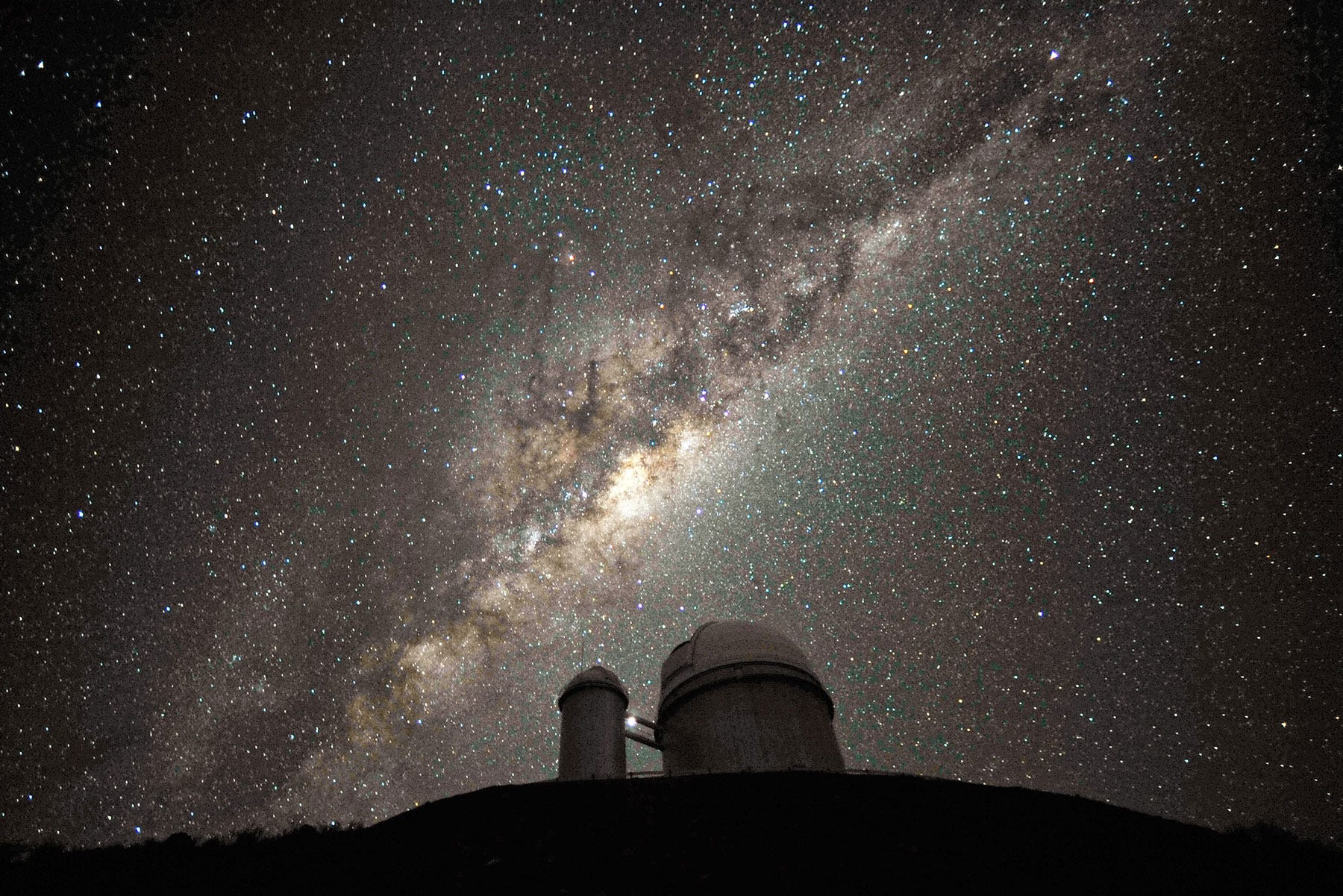
This is the time of year when the core of our galaxy is visible from much of the Northern Hemisphere. Folks Down Under get the most spectacular views, but at least we Yankees get a peek for a few months. On Saturday we will experience the Moon-Sun conjunction in Gemini opposite the Galactic Core in Sagittarius, so this seems like a good time to float the topic.
The astronomical and mythical details of our galaxy as I know them are great fun, though suffice it to say that at the core of the thing is a supermassive black hole called Sagittarius A*. It does not have nearly enough gravity to hold our big spiral home together. Something else is doing that; I suspect that therein lies the secret of gravity, thus far as elusive as “the aether.” The theorized thing that holds galaxies together is described as another elusive substance sans field or particle: dark matter.
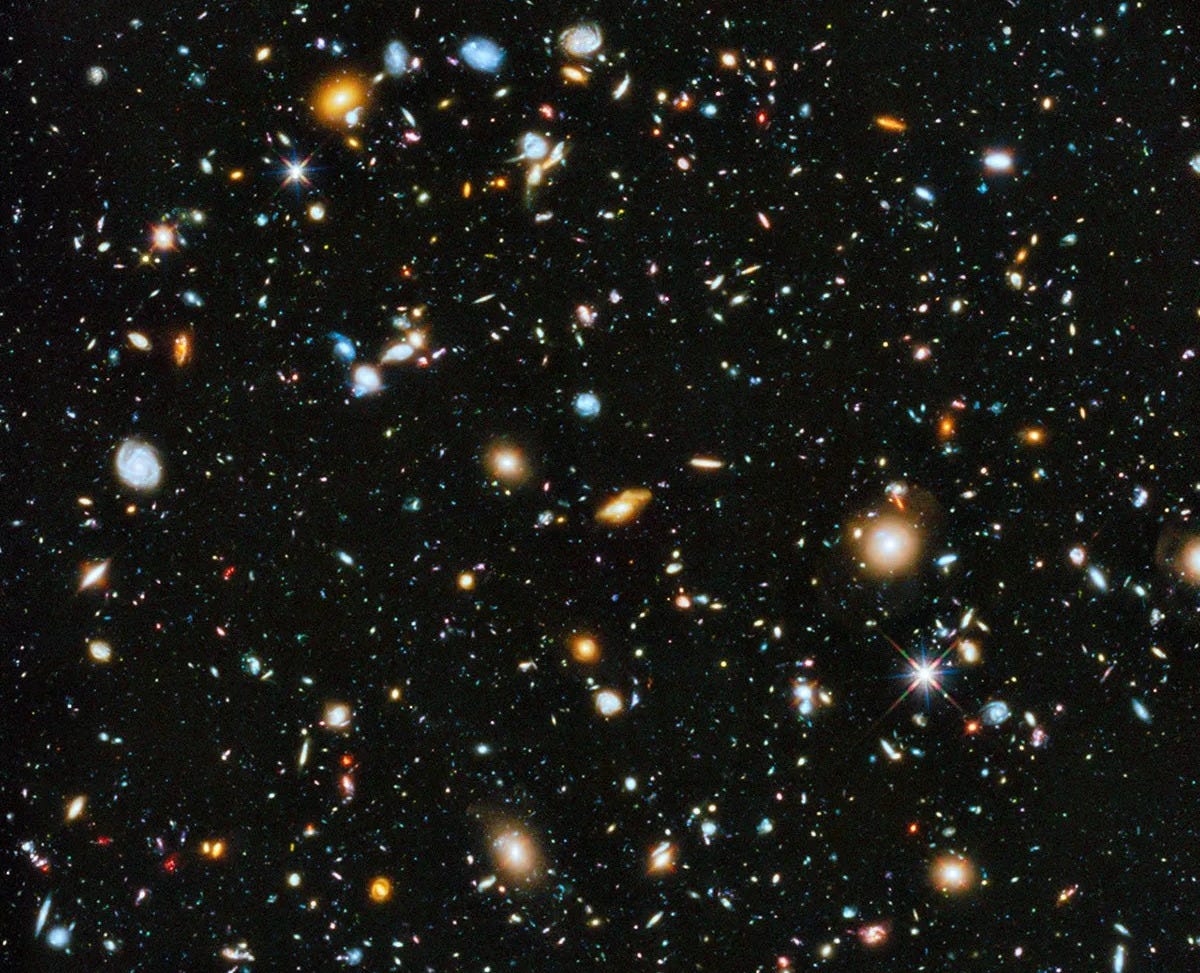
Another detail is that there are lots and lots of galaxies of many shapes and sizes and (we are told) extending back in spacetime over 13 billion years to what is said to be the “absolute infancy” of the universe. The famous Hubble Deep Field photo, a kind of baby picture of us all, provides a view of a patch of sky 2.6 arc minutes wide (a single degree has 60 arc minutes, and the apparent width of the Moon in our sky is 30 arc minutes, so that little patch is 1/13th of the Moon’s diameter).
I have no reason to believe that this is not a real image, though I think the “Big Bang” thing needs a little work and was, by far, the worst show in the history of television. I’ve listened to a lot of physicists talk about “the bang, big,” and to me it seems like they’re saying “God created the universe,” with time stamps narrated in nanoseconds by Stephen Hawking’s disembodied voice.
Staying in the Neighborhood
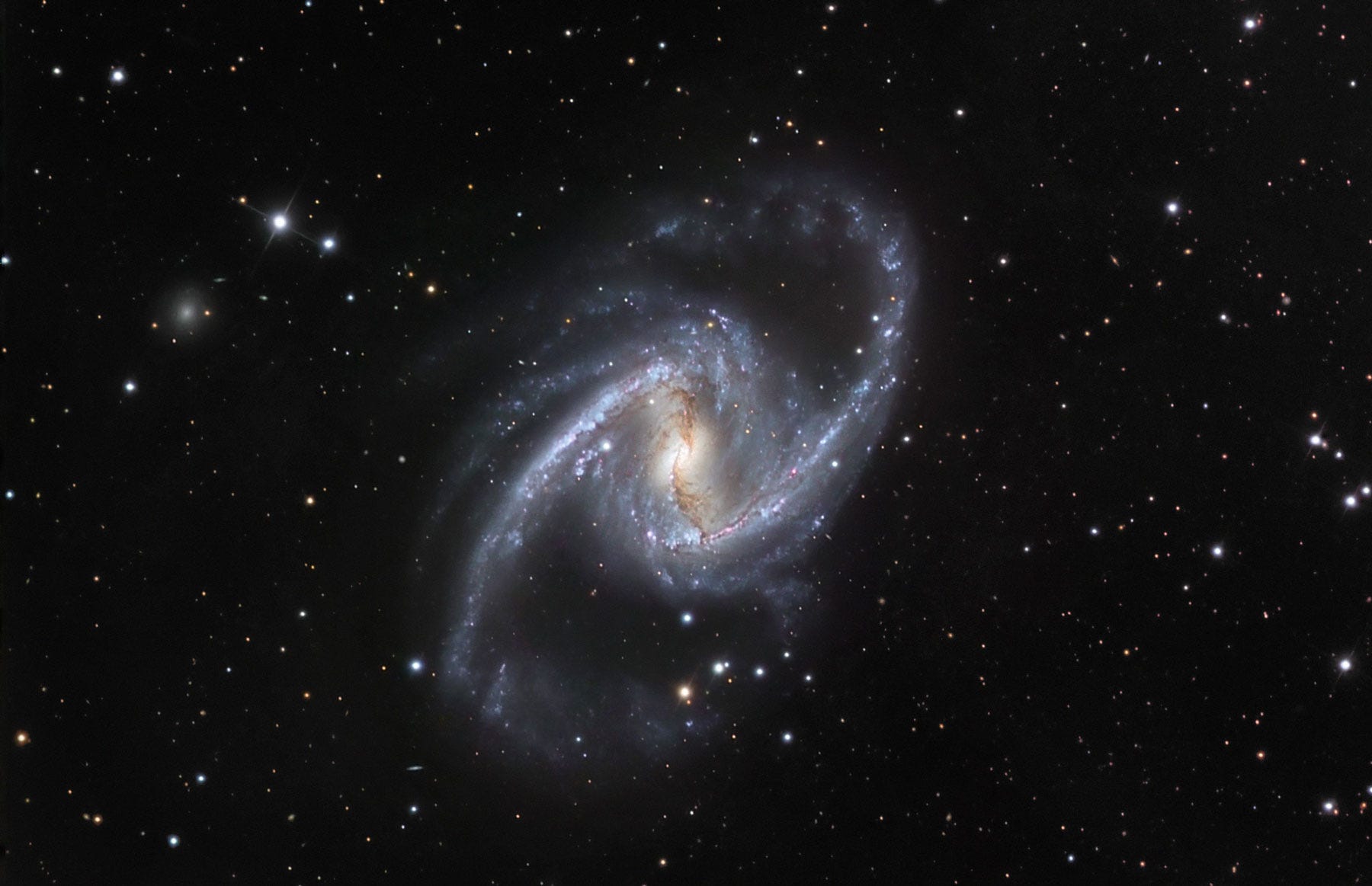
For now let’s keep this discussion local: on our planet, in our consciousness. I have wondered about the influences of the Galactic Core since close to the beginning of my astrological inquiry (and galaxies were my favorite part of Prof. Lyle Borst’s Astronomy 101 class at SUNY Buffalo). I wondered why our galaxy didn’t get more discussion among astrologers and was not a standard feature in charts.
A few astrologers use it: Philip Sedgwick and Alex Miller are the better-known among them. Alex, author of The Black Hole Book, told me he reads galaxies as black holes (you find them contained in galaxies). I think these days he’s moved on to working mostly with named asteroids.
Sedgwick, Deep Space Papa Smurf (and A++ centaur delineator), has this to say about the influence of the Milky Way: “[An] energetic crowding process pushes out mentally/emotionally stored data to clear space for new information to enter both the conscious and subconscious minds. Often the information released does not follow a sequential pattern. Holes are left in one's data field. Access time to known information and stored memory increases. So periodically, it becomes time to rearrange life’s data and re-pack it.”
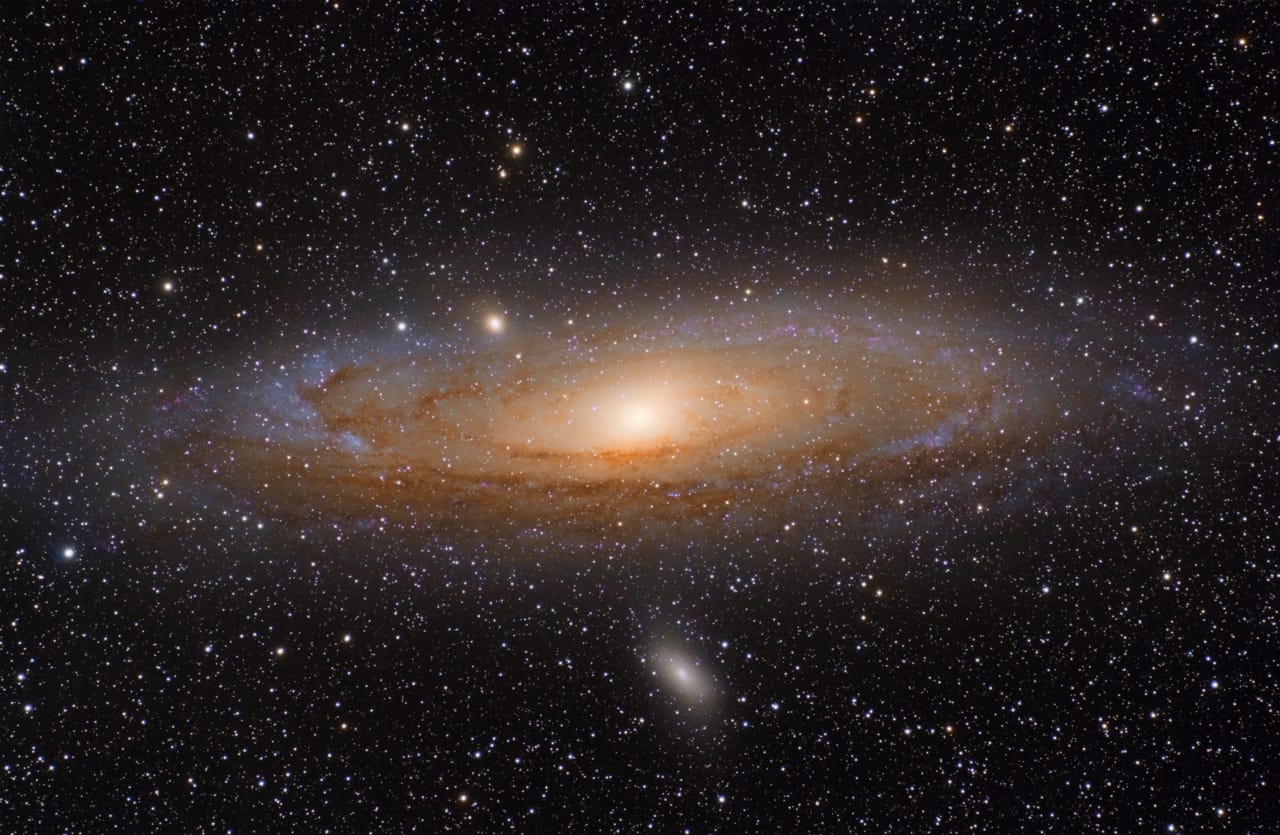
Earth’s star (the Sun) is said to be halfway out from the center of the galaxy, between two galactic arms. You don’t have to go too far inward toward the core (a few thousand light years) to have the sky be so bright you could get sunburn at midnight. I suspect this is what he means by energetic crowding. As you read, please remember, astrology is about metaphors. It is not “the truth.” Individual experience varies. Please use astrological concepts as prompts.
I consider the Milky Way, not the solar system, to be my true home. My own experience of delineating the Galactic Core went like this. After falling in love with it, I kept having tremendous, spontaneous revelations about what it meant, which seemed to solve the mystery of the universe. Then I would forget whatever it was before writing it down. That happened so many times that I base my delineation on that experience of its elusive nature. To me it feels like a homing signal.
A Proving Moment
I think it’s a good idea to be not-so-sure about an astrological influence as massive and mysterious as the Galactic Core. I think it’s great to not be so sure about the seemingly small things too, because anything you encounter might contain the question you need to ask.
It’s trendy now not to ask or to assume that you already know. It’s not trendy to hang out with a question. It’s not trendy to endure the stress and humility of learning. It’s stupid to think there might be a point to why you get out of bed and experience existence.
Each of us, or maybe all of us, are confronted by many mysteries right now. To engage this with awareness takes work. I suspect most people are a little too entertained, numbed out or terrified to feel the mystery of existence, which has been consumed by the monotonous, emotionless voice of ChatGPT.
Then there’s one of my least favorite lines: “I don’t know what to believe anymore.” I suggest you think about that until you’re annoyed. The first time this turn of phrase whacked me was when someone said it about the shape of our planet. He didn’t really seem so concerned, “Oh these days, you can never be sure. I think I want a Slushie.”
It’s one thing to hear some lazy fool make this most absurd statement. It’s another when the person is standing in your studio after being interviewed about their new, five-part film series on the history of infectious diseases, who claims he was recruited on a dark street one night by a representative of the CIA when he was an MBA grad student at Columbia University, but declined the job, and then decided he didn’t know what to believe….about the shape of the planet.
All for the better…what belief does is plug a potentially interesting hole you found in your awareness. Why believe anything? It’s much better if you don’t know. Then you might find out. But nobody wants to not know; it’s easier to “believe.”
The Discovery of the Galactic Core
So how did we humans discover that our galaxy has a core? Well, that happened about two years after the discovery of Pluto, which is really a cluster of six little planets orbiting around a common center of gravity. None of them are moons.
They are called Pluto, Charon (not Chiron), Nix, Styx, Hydra and Keberos. Why does that matter? Maybe it’s just fun. When you see Pluto in a chart, remember that there are six things right there. They don’t all get separate symbols; they have the same degree position. They are far from us and close together.
Anyway, in 1932 we only knew about Pluto. (Charon, improperly said to be “Pluto’s moon,” wasn’t discovered until 1978. Right before that happened, Isabel Hickey had just come out with a little book proposing there are two facets to Pluto.)
But I was trying to tell you something about the galaxy, discovered two years after Pluto. I sometimes think these discoveries tell a story as they unfold. That’s a matter of pattern recognition or bullshitting yourself; the difference is relevance and cohesion. Pluto can have a dense but spiritual quality, and so too does the G.C.
So like I was saying, one day some Bell Telephone (Ma Bell) engineers, led by a guy named Bob Jansky, were laying long-distance cable under the Atlantic Ocean when they picked up hissing static affecting the audio. They set out to figure out where that sound was coming from. It turned out to be a thing 25,000 light years away, right at the center of the mass of stars shown below.
It Must Be True — I Read it in The New York Times
The New York Times headline from May 5, 1933 is below. Note, this is the headline, not the article. It contains more information than three hours of CNN or several thousand tweets:
NEW RADIO WAVES TRACED TO CENTRE OF THE MILKY WAY
Mysterious Static, Reported by K. G. Jansky,
Held to Differ From Cosmic Ray.
DIRECTION IS UNCHANGING
Recorded and Tested For More Than Year
to Identify it as From Earth's Galaxy.
I love that they studied the situation for a year — a whole year, a little longer actually — before coming to any conclusions. They didn’t just dash off a “preprint” with “tentative findings” and stick it on the internet. Dr. Jansky and company wanted to know they were probably right before claiming to be so. (I bet he was a heck of a chess player. The Very Large Array has now been named after him.)
Sometimes the universe is funny. The Galactic Core was discovered in Sagittarius (where it remains today, creeping by precession toward Capricorn as the Earth wobbles). Sagittarius is the sign of all matters “foreign” and “long distance.” It was discerned accidentally, by way of interference, with foreign long distance telephone lines. I mean, chalk one up for the guys in togas and add that to your understanding of what Sagittarius is all about.
What is a “cosmic ray”? I had to look that up. It reminds me of a guy in a tight silver outfit holding a weird gun conversing with a robot. Cosmic rays are described as high-energy particles moving through the universe at nearly the speed of light. Oh, cool, thanks a lot. Why does this matter? Is it even possible to understand? If those particles are passing right through you, what does that make you?
The Ballad of Nut and Geb
I once lost a friend because I said that I thought the cosmos was female and that consciousness is male; a kind of extension or creation. I don’t think this makes women superior to men, but like other factors, describes their immense responsibility to existence. And we all have the responsibility to work for balance.
We are held in the womb of the cosmos. People are touchy; he was a leather queen, a gay male dominant. I guess my counting the whole cosmos as feminine was too much pussy for him. Hey that leaves more for me. I experience our galaxy as the cosmic yoni — this vast, vulva-like streak across the sky from which all we know about is born.
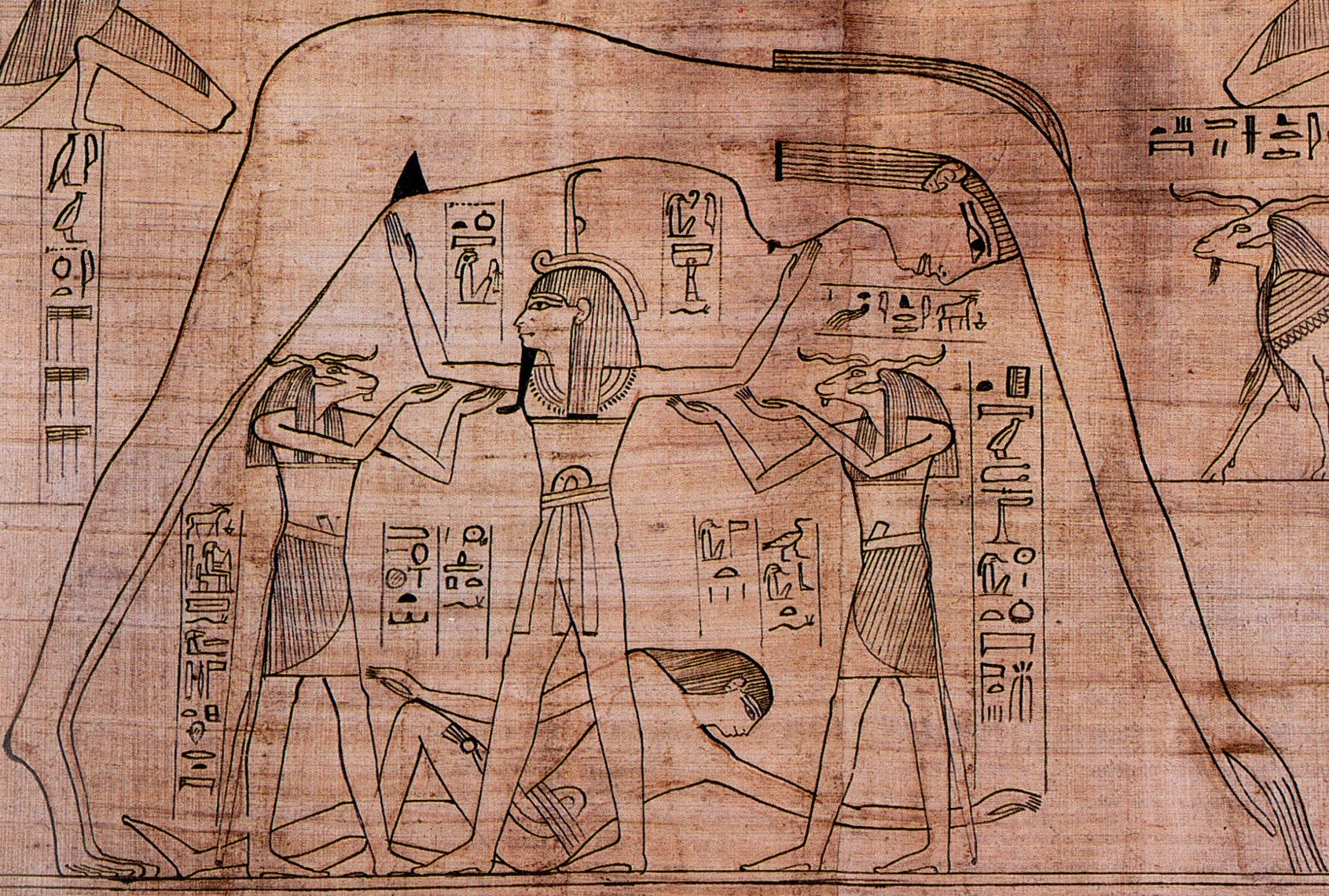
The Egyptians also considered the sky (and in particular the galaxy) feminine. I look at a lot of creation mythologies when I study the meanings of new planets, and the whole sky=male, earth=female thing gets a little boring after a while. The ancient Egyptians are always interesting. They had respect for sex and respect for the feminine principle as well as the masculine. Many mysteries echo through the halls of the temples at Karnak, including the vast mirror that reflects the stars.
Physical existence, the Earth, is called Geb. Our galaxy is called Nut. You’ve seen her before, including in the Crowley-Harris Thoth Tarot, in a beautiful take on The Star, Atu XVII of the major arcana.
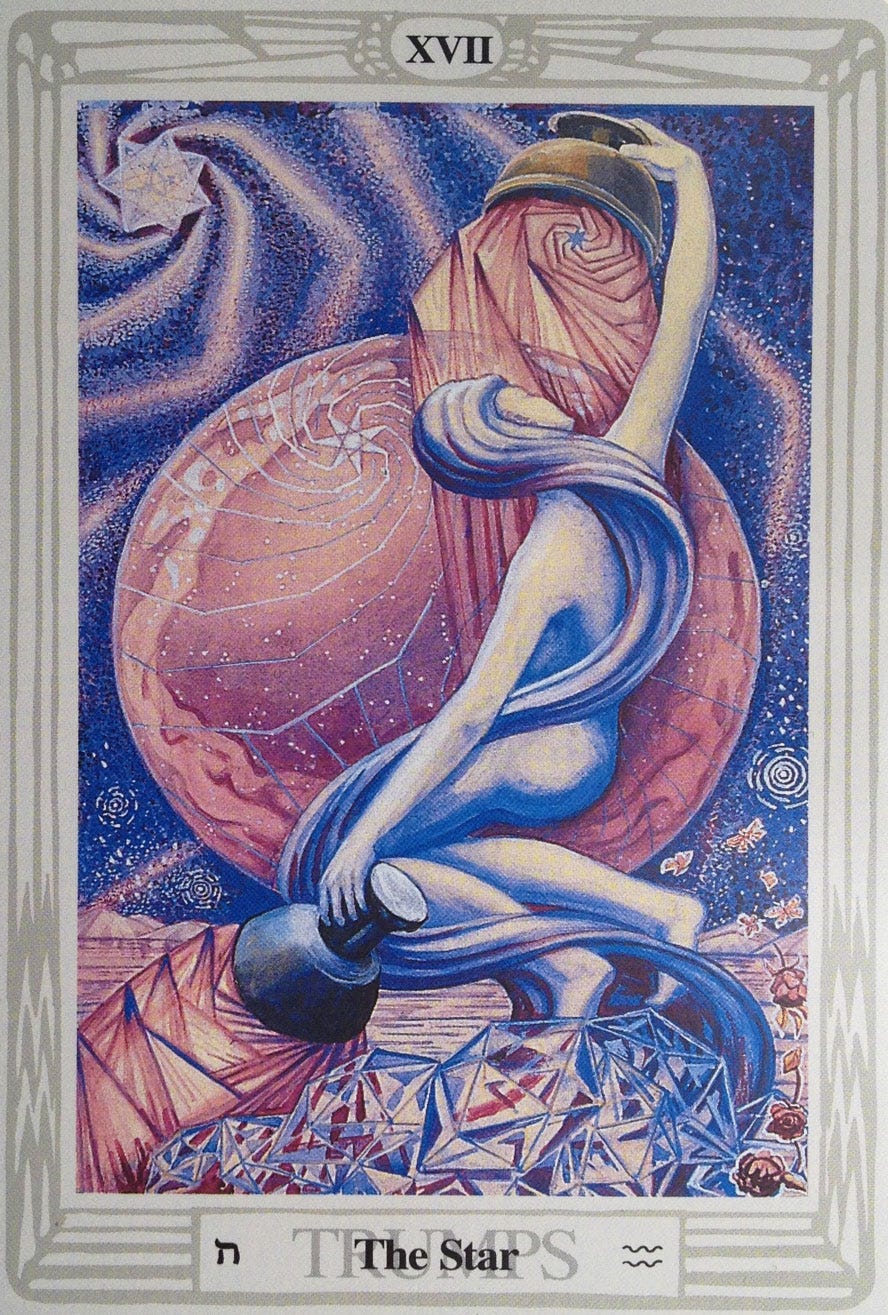
Nut’s body here is depicted as a cosmic vector that connects us to both Earth and cosmos. The galaxy is a bridge to the greater cosmos. This is poetry, not science.
Coming back to the Moon and the Sun reflecting, gathering or condensing this energy or quality of consciousness. Consider the solar and lunar bodies swimming in the soft light of the feminine, the “turning toward” the gateway to time and incarnation known as paravritti.
Mitákuye Oyás’iŋ —

Read about when Pluto crossed the Galactic Core in 2007 in a Planet Waves special edition called The Spiral Door.
slight correction: this should read as follows:
The first time this turn of phrase whacked me was when someone said it about the shape of our planet. He didn’t really seem so concerned, “Oh these days, you can never be sure. I think I want a Slushie.”