
Ashes of American Flags
A Semiquincentennial Memoir

American Dream and the American Experience
Dear Friend and Reader:
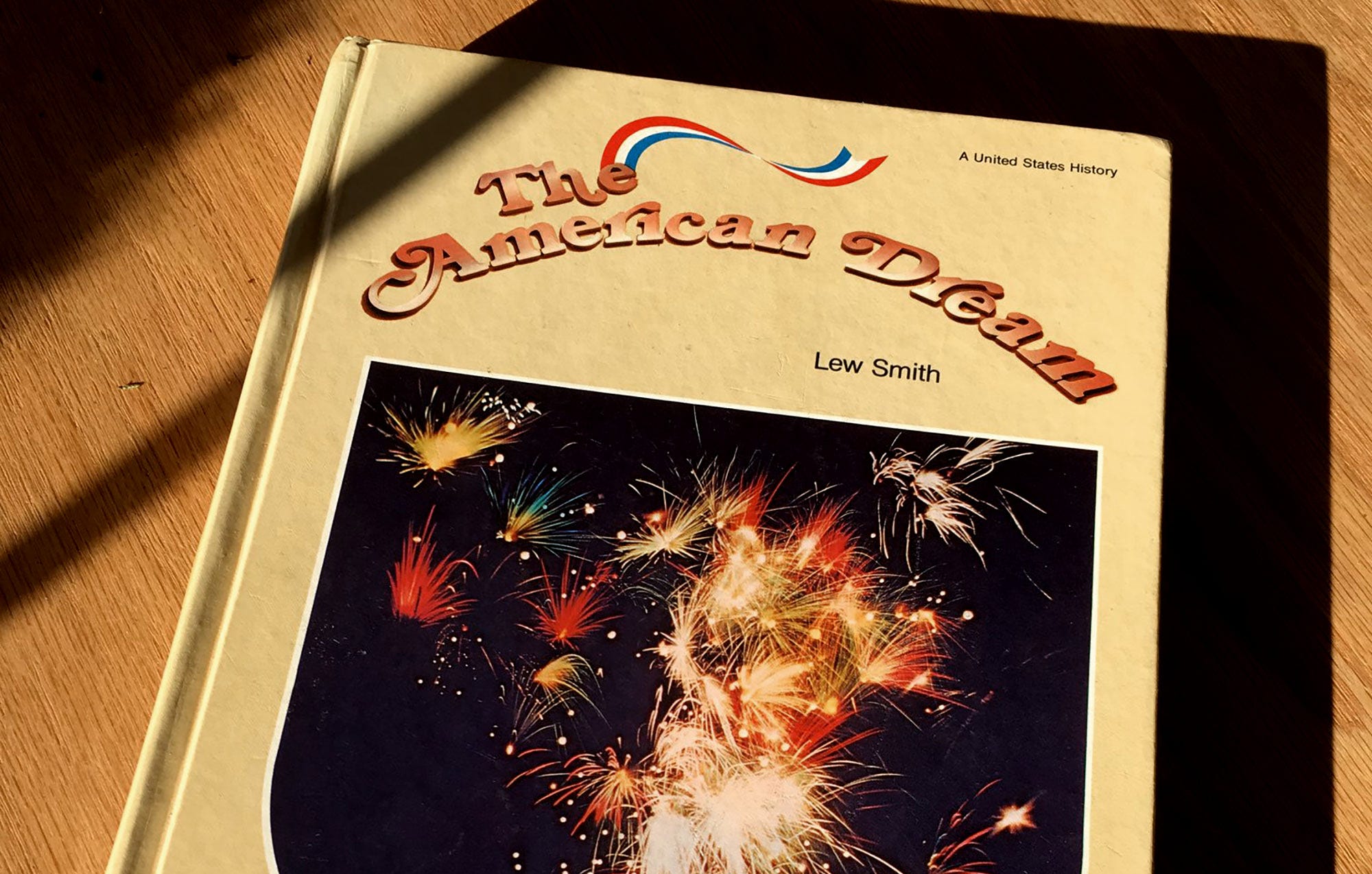
When I attended John Dewey High School in Brooklyn, named for the philosopher on whose educational theory the school was based, there was a class called American Dream. You could take ordinary, boring, junior-year U.S. history, or you could opt for what students called Dream.
A yearlong alt-American history class, in Dewey style, it was based on direct experience to the extent possible. It was taught by the cool Social Studies teachers, Len Mednick and Paul Weiss; and there were student teachers called Dream Planners. Everything at Dewey was about getting involved in your education. As the man himself said, give the students something to do and they will learn from experience.
Dewey, the school, had no grades, seven-week cycles rather than endless semesters, an open campus and a schedule designed for all homework to be completed during an extended, eight-hour school day: an all-American experiment.
It was never explicitly stated what the actual American Dream was, but we were all curious about the American experience; and it became clear the dream, such as it was, meant something different to everyone. In America, you are free to dream your very own dream. Maybe that solved the mystery, and at the time, it really seemed possible.
Horatio Alger, Kurt Vonnegut, Mario Puzo — and Miss Black Anthracite
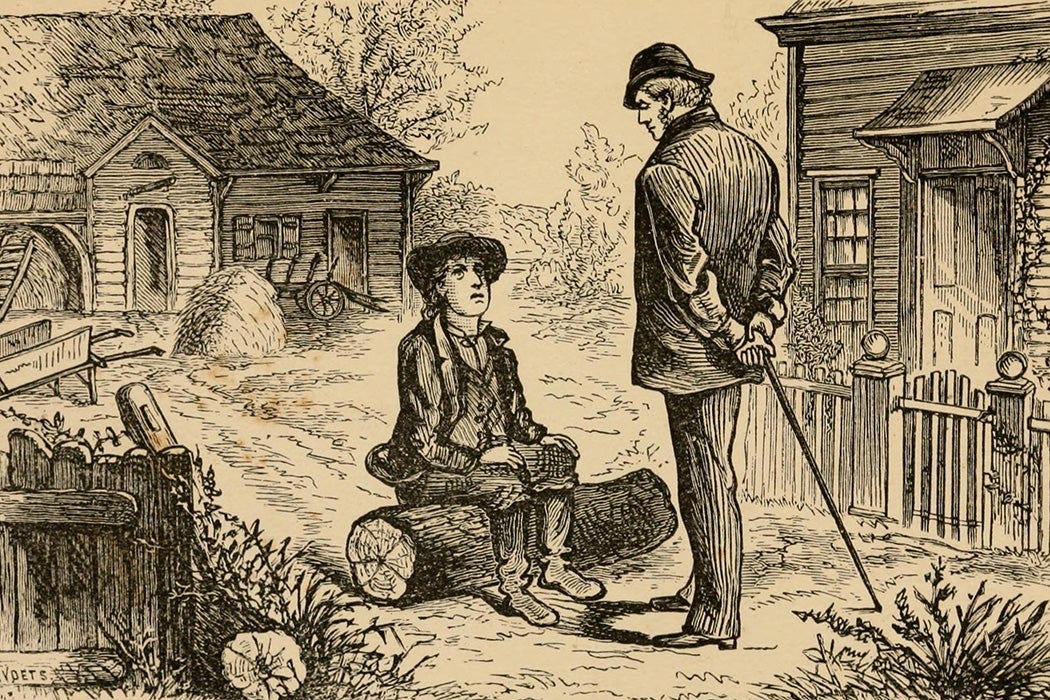
In the Dream program, there were no boring, dry history texts. We read books by Horatio Alger (Ragged Dick, a rags-to-riches classic; interesting critique here) and Kurt Vonnegut (Breakfast of Champions, a scathing assessment of American capitalism). We read The Fortunate Pilgrim by Mario Puzo, about the experience of Italian immigrants. The program had its own textbook written by the creator of the class, Lew Smith, who later returned to Dewey as principal.
Instead of being drilled in the Constitution, Dream students held a day-long “constitutional convention” in a mini-theater section of the auditorium, starting from scratch and designing a government.
To learn how other people lived, there was the annual “urban-rural exchange.” Dream students, teachers and planners loaded into buses and headed for Chenango County in central New York, in our particular year spending a long weekend with students at Sherburne-Earlville Central High School. We went to their school for a couple of days and lived in their homes.
This was a place that had their annual “Miss Black Anthracite” beauty pageant (it was coal country; I never met her; she was probably not black).
Then the rural kids came to Brooklyn and lived with us for a few days, experiencing inner-city life in Coney Island, Marine Park, Park Slope and other neighborhoods. Usually New York City and upstate New York are mutually exclusive, but not for us. Plus this was kids actually doing something. Going someplace. Staying in the homes of people they had never met. I dare say we actually learned something.
My Favorite Holiday
When I was a kid, the 4th of July was my favorite holiday. I would look forward to it all year. I was patriotic, so it mattered to me. And instead of getting dressed up for dinners featuring my Sicilian family’s endless, wine-infused angst (to wit, relatives who all hated one another), only young relatives came for July 4.
It was a summer holiday, and not religious; there were fireworks and a barbecue and my Uncle Anthony would be there.
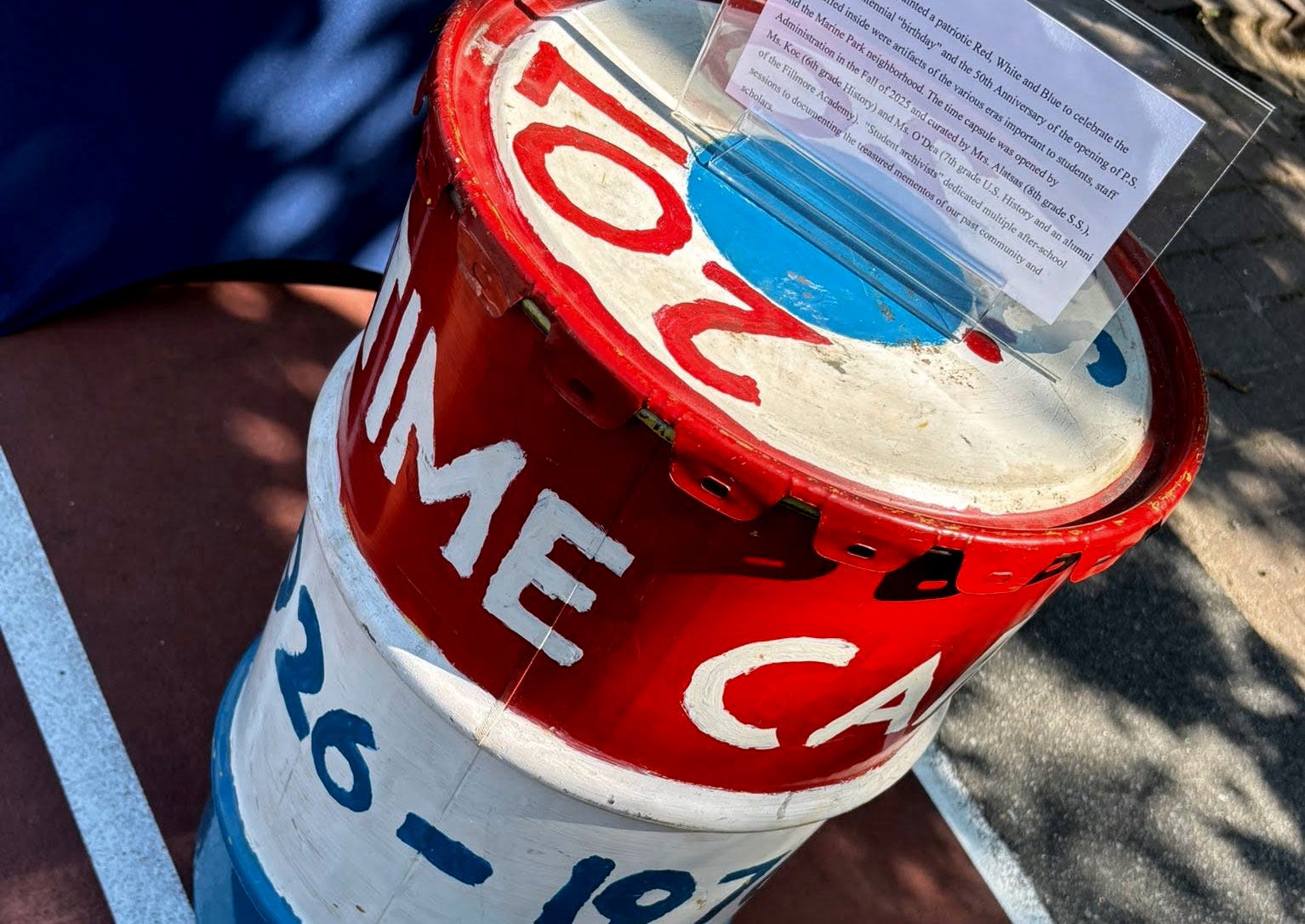
When I was in 6th grade, it was the Bicentennial year 1976. I guess after Vietnam and Watergate were over, some collective national pride was allowed. The 200th birthday of the United States was the theme of my grade school graduation ceremony and we buried a time capsule (which was just dug up in May 2025).
Everyone was painting everything red, white and blue. I went back a few years ago and there were still patriotically-painted fire hydrants. I can’t find my photos of them.
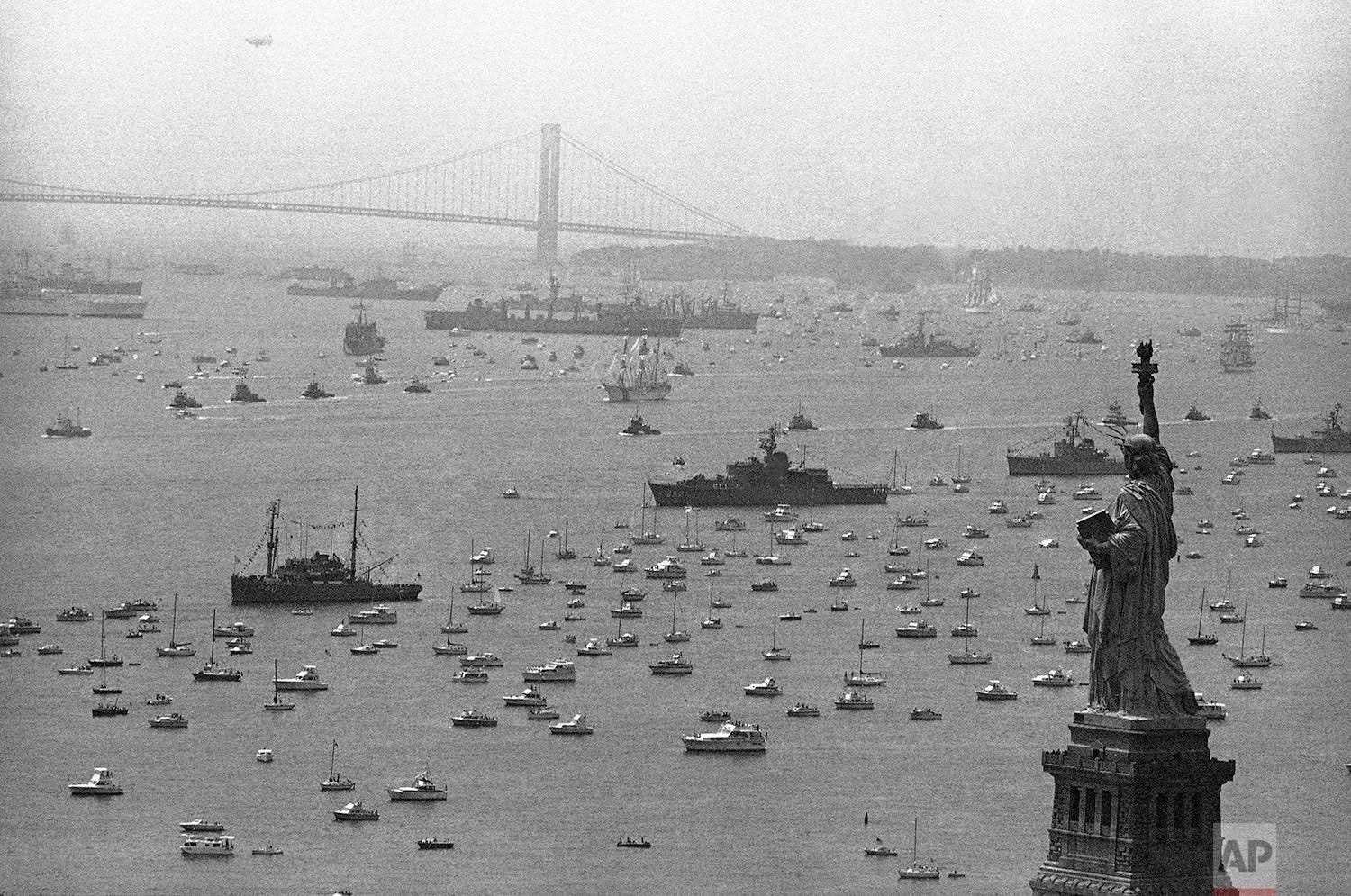
The tall ships came through New York Harbor (I missed this; my mother doesn’t like crowds). I’ve grown up to have a similar value. And as an adult, I despise fireworks. Every July 4, my canine friend Jonah would curl up near me on the desk, terrified of the sound of explosions coming from the sky. I would whisper in his ear, “I know, I don’t like it either.”
Something Special About the United States
The message at the time was that there was something special about the United States of America. This has a term: American exceptionalism, which is the universal excuse and elixir for all that is wrong with our country.
It was not until I got to university that I started learning the details about American atrocities in Vietnam. Though that war was said to be over, there were new jungle wars in El Salvador and Nicaragua where the horrors continued.
In El Salvador, Archbishop Oscar Romero was assassinated while offering mass on March 24, 1980 (during the Carter administration). The CIA didn’t directly do the hit, but they knew it was going to happen and did nothing to stop it. High-level masterminds of the plot were trained by the CIA, and the Reagan administration provided funding to El Salvador to prevent a left-wing takeover of the government.
Reagan’s Iran-Contra Affair
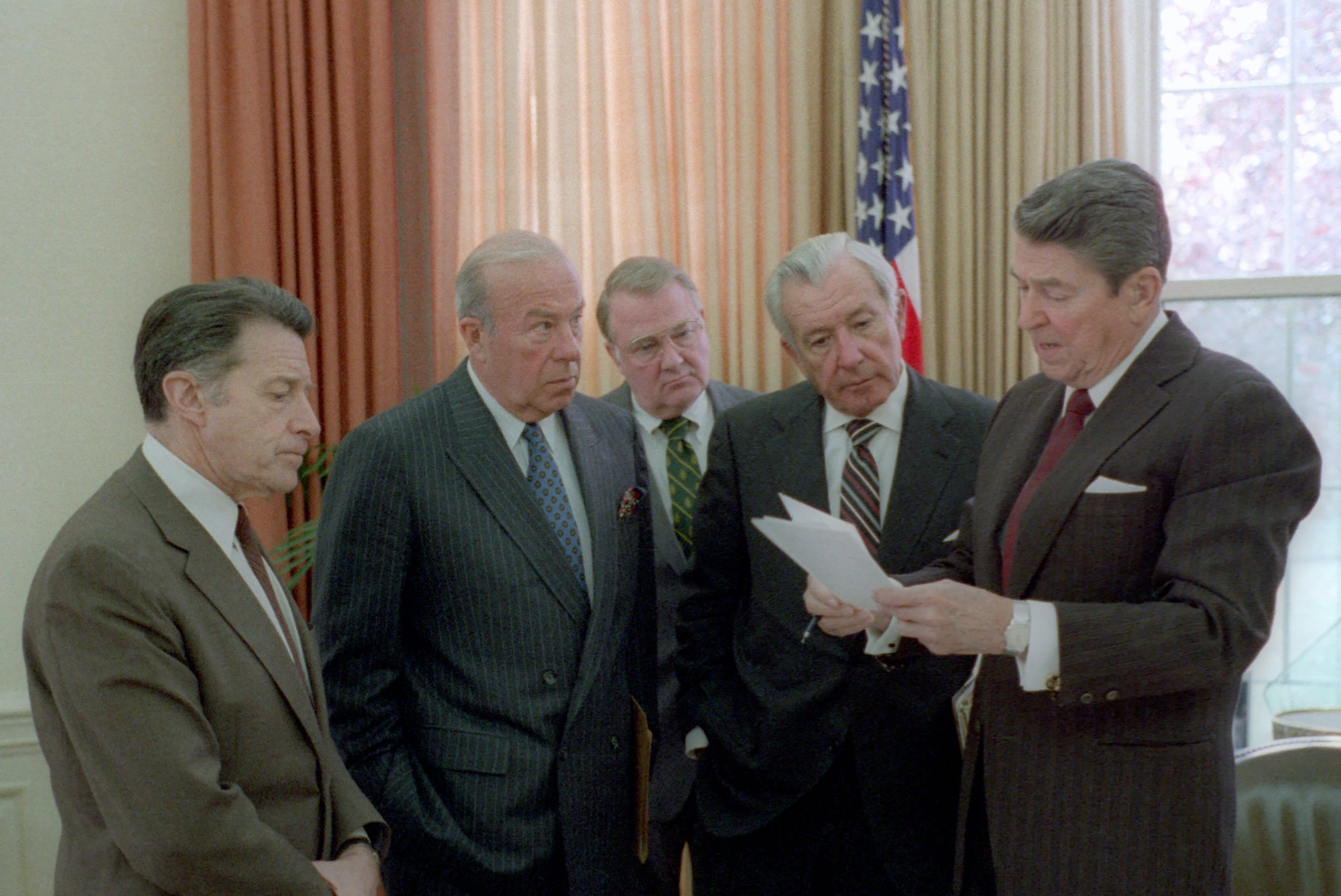
When I graduated university in 1986, the Iran-Contra affair emerged. Back in 1980, all-American presidential candidate Ronald Reagan had cut a deal with the Iranian terrorists to hold the American hostages through the election, in exchange for purchase of U.S.-made weapons that would be used to fight our then-ally, Iraq. (At the time there was a long, vicious Iran-Iraq war wherein Iran was the U.S. enemy and Iraq was the U.S. ally.)
The profits from the arms sale were then diverted to the CIA-backed contras in Nicaragua (eventually violating a federal law called the Boland Amendment). The contras’ role was to attack soft targets such as farms, hospitals and schools, to make the Nicaraguan people dislike left-wing Pres. Daniel Ortega and then elect a right-wing government — to stop the killing of their children.
It is amazing that people can muster up this kind of cruelty and still count themselves as heroes and patriots and leaders of a “free country.”
From this, I learned that the right-wing government in the United States so detested anything on the left that it would commit mass murder to stop it. This was a country I did not recognize, and whose actions were the source of most of my grief.
My Piece of the Dream
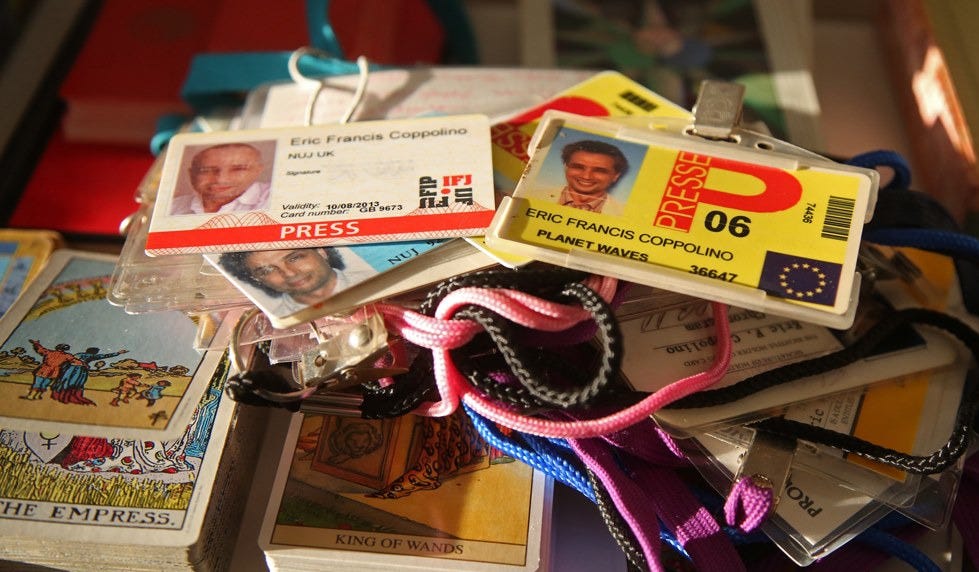
The thing about the American Dream is that someone might get a little piece of it. My bit was and is being a journalist. I understood from a young age, that I could practice journalism mostly with impunity, and it gradually became the framework of my life.
I understand the power of the 1st Amendment. It is my personal policy never to defend the “free press,” only to exercise it. I understood Article 1 of the Bill of Rights to be a uniquely American thing, and that is where I was called to make my investment in the Dream.
There were opportunities to edit and write, and I pretty much took them all. I have started many publications. When I was 25, I founded a student news service that covered the State and City Universities of New York (SUNY and CUNY, reporting on the central administrations, the governor, the state legislature and about 100 campuses in the systems).
This included organizing a network of correspondents around the state, and serving as a consultant to the newspapers. (Heartfelt shout-out to Pipe Dream at SUNY Binghamton, who loved and supported our mission the best.)
By distributing to student newspapers around the state, there were days when readership was in the hundreds of thousands. Notably, this was in the days well before the internet. We distributed by fax, ground mail and hand-delivery. This made the central administration very, very nervous. They had never encountered such a social or political force before.
A Modest Part of the Solution
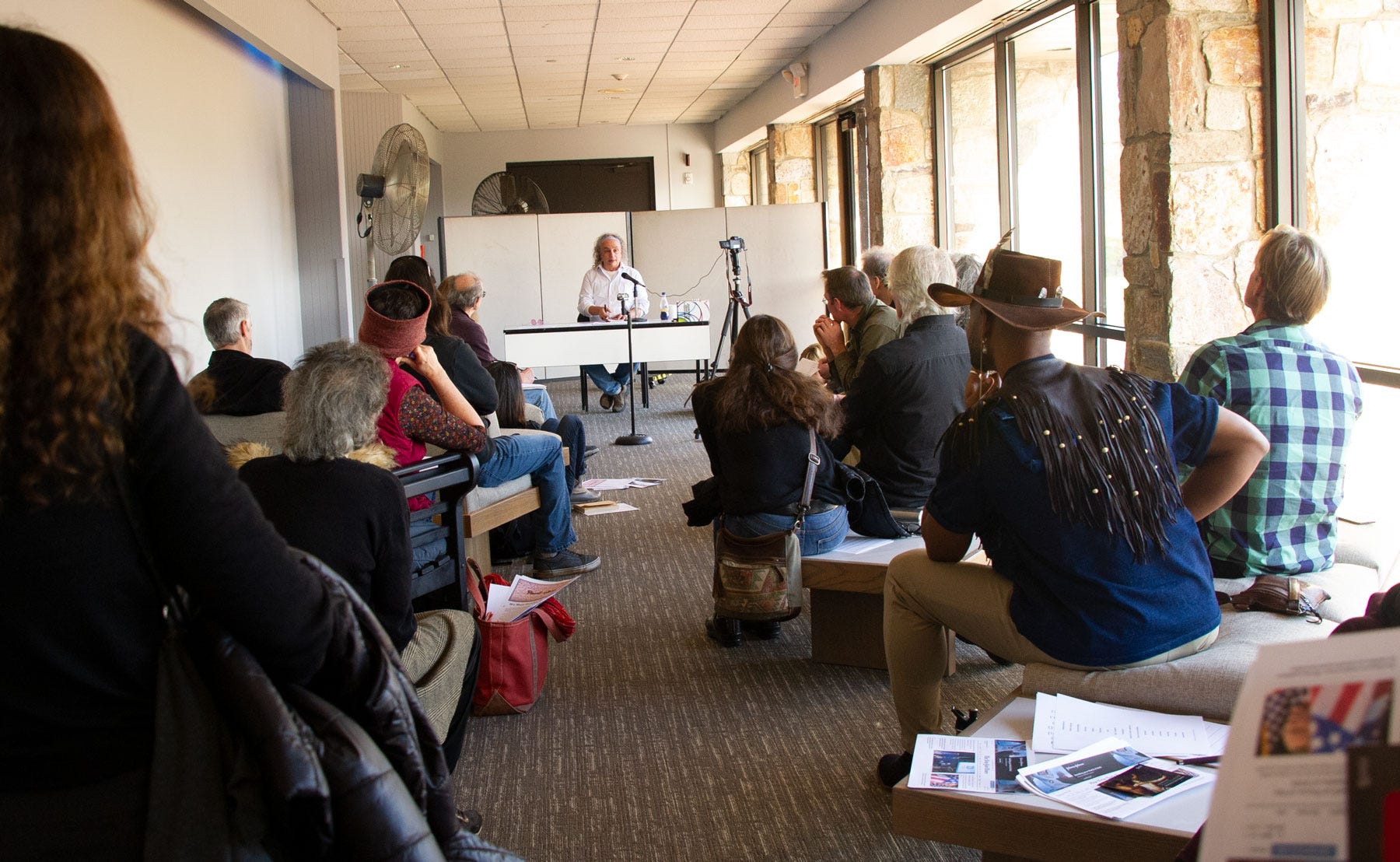
For me, the most important thing about journalism is that it offers the opportunity to be part of remedies for the problems in American society. I have a way of getting results, modest though they may be. This is always the product of pluck, commitment and aspiring to do the best work I can.
I consider that the cost of the American Dream — in addition to raising every penny for printing, internet fees, equipment, picture cards and travel without accepting any advertising or corporate sponsorship.
In my life, the American Dream is not about wealth or a sports car or status. I get the privilege of being useful to society. Journalism provides me with the opportunity to learn and teach every day. I have access to many unusual people and places (anywhere I can talk my way in), and then I get to tell you the story.
Living as a reporter and photographer facilitates my being not just a passive observer but rather an active participant in the human experience no matter where I am. I have the added dharma of teaching journalism, which I do in everything that I produce and everyone that I come into professional contact with, as well as the reporters and editors who work with me.
As Opposed to Good Morning, America
It is true that I have met many other members of my profession, and I’ve noticed they’re not doing the same thing that I am.
Usually, the story they report is within pre-established parameters acceptable to advertisers. Mainstream reporters can’t say too much. They know everything and nearly always, conceal it with a smug look on their faces, doing what they must.
There is no actual critique contained in their work. Everything is transformed into Good Morning, America. This is why I start my own publications and develop my own issues. Once established, much larger media have picked up my reportage many times.
On a number of occasions, various authorities have attempted to interfere with my work. In the 1990s when I was reporting on contaminated dorms on the SUNY New Paltz campus, administrators declared me persona non grata for being a public nuisance.
After I filed a 1st Amendment lawsuit in federal court and litigated for a year, the state allowed me back on campus, paid damages (which went right into reporting costs) and admitted that my rights were violated. Within weeks of this, my coverage forced a partial cleanup of one of the dorms involved. (All of that coverage is archived here.)
Covering the Ongoing Tragedy
Now for the sad part. Working the way that I do, there is no looking away, no pretending that things are just fine, and no puzzle section to get lost in. Nobody tells me what is right or wrong; I have to slug that out for myself.
I’ve covered thousands of issues, and each one has some tragic element, often deeper than I can say. Every home destroyed in a flood or fire is a world of pain.
One tragedy I’ve covered since 1983 is the chemical contamination of the United States (and the world) by American chemical manufacturers.
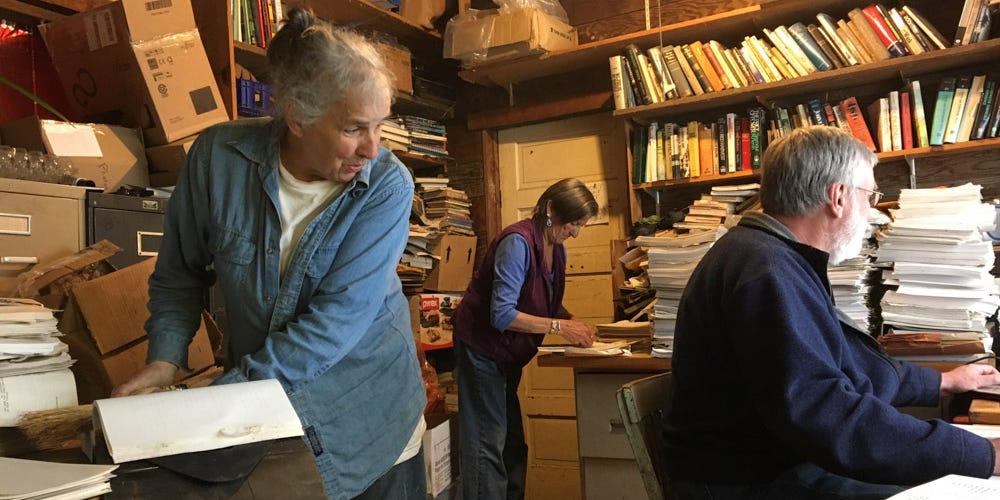
With my colleagues shown above, I am the custodian of The Poison Papers, 100,000 pages of documents and testimony that reveal how American chemical companies systematically contaminated all of our food and the entire environment with pesticides and industrial compounds.
(Through my nonprofit journalism mentorship organization Chiron Return, I now hold the sole copy of the paper documents. They have been scanned, uploaded and are hosted by four different online archives, including at Columbia University. See coverage here.)
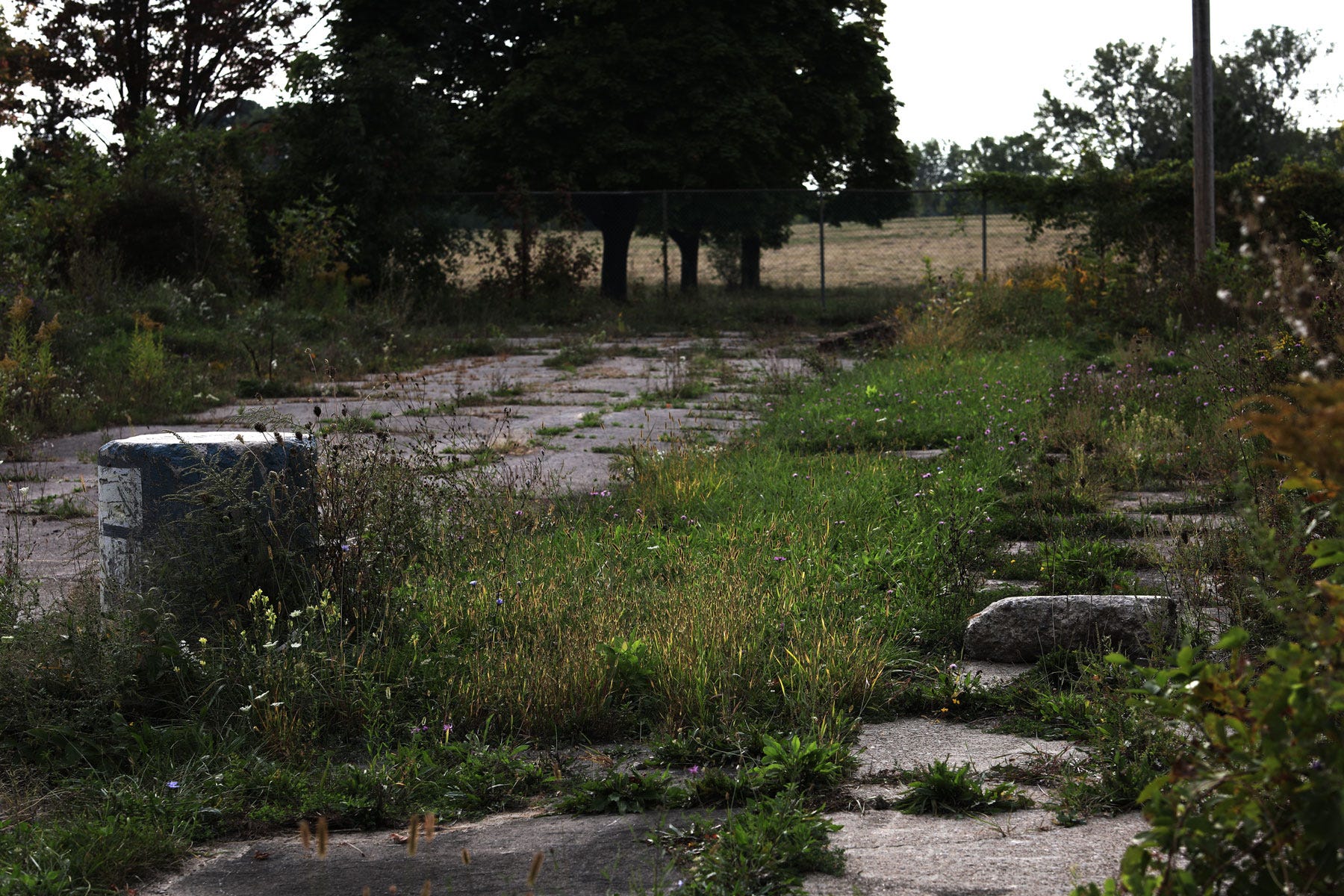
It was on this topic that I began my investigative reporting career at age 19 in 1983, at the Love Canal site in Western New York. When you learn that a local Board of Education can elect to build two schools floating on top of 23,000 tons of toxic waste, it’s hard to be idealistic about the country you live in.
The atrocious conduct of the chemical manufacturers was one thing. That the Niagara Falls Board of Education — residents of the city — knew about the problem, built the schools and sold off the rest of the land to 1,000 families, is another. This is not an isolated incident. It happens all the time. If part of the American Dream is the convenience of “better living through chemistry,” the nightmare on the other side is described in the dusty, aging boxes of court papers that have been passed on to me.
I have the proof. I cannot deny what happened. Justice has never been served. This is an important part of the truth about the United States and there is nothing to love about it.

A World Without Grieving
The reason you don’t hear much about the chemicals that have engulfed the U.S. and much of the world are the distractions of disaster capitalism. The Sept. 11, 2001 incident is a perfect example. There was not even a day of grieving; Pres. Bush said to go out for dinner to help the economy.
In addition to the shock of 9/11 and the ongoing death toll, society was conned into thinking that all the government responses would protect our freedom. In fact we got a massive expansion of the NSA and domestic spying; a boon for the police state (while ‘smaller government’ was being touted); air travel that is itself a form of terrorism; and our current existence of life in a surveillance prison.
Every major development since 9/11 has followed the same pattern: shock and disaster, more surveillance, reduced freedom, and unresolved, unacknowledged grief. Does anyone even remember all those school shootings of the 2010s? What happened to all that pain? Why did they suddenly stop? It was almost as if a kind of program just ended.
As for viruses: they are always blamed for what drug companies and chemical manufacturers do. When you let go of the concept of a virus, all you lose is an excuse.
From Disaster to Disaster, Then to Instagram and Porno
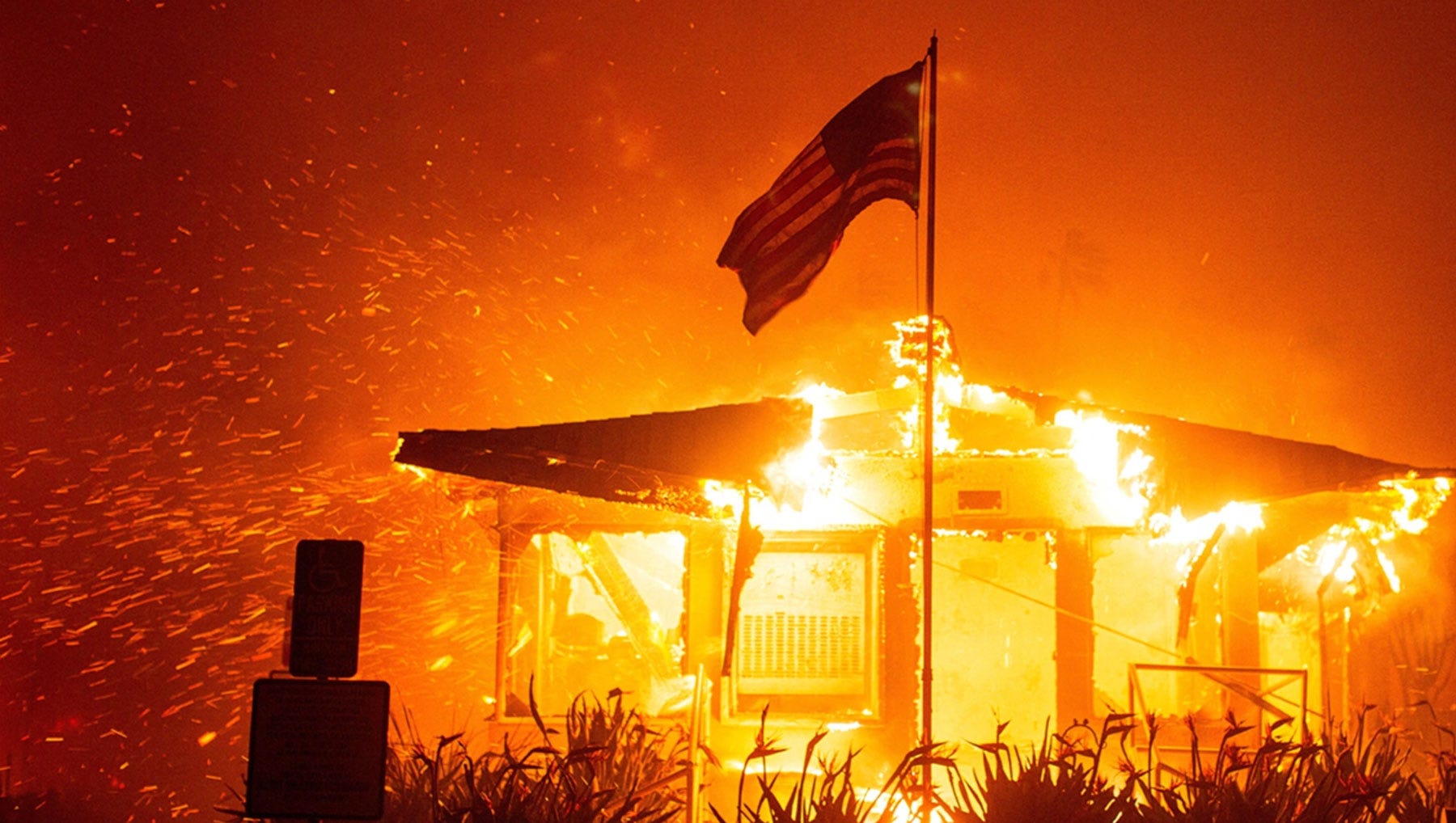
The horrid part of this scenario is that nobody seems to grieve anything. We just move on, from disaster to disaster, intermingled with spectacles like cage fighting on the White House lawn, carbonated with 737,000 daily Instagram shorts, 20 million daily YouTube videos and god knows how many hours of OnlyFans streaming.
American society is now sacrificing itself to its iPads. Many children cannot read or count. Music teachers say many kids don’t know the alphabet; the scale only goes up to G. As a result, kids — I mean from second grade down — are becoming increasingly violent.
They don’t know who they are, and violence is the quest for identity. Eventually these kids will be running society. Remember that the same forces that influence them, influence us all. Individual conscience is rooted in literacy. Every day there are fewer people capable of reading an article like this one. Civic participation is rooted in conscience. Reading makes public participation possible.
No Memorial to the First People or the Enslaved Africans
Between colonization and westward expansion, at least 574 Native American nations and tribes were conquered in the United States and another 634 in Canada.
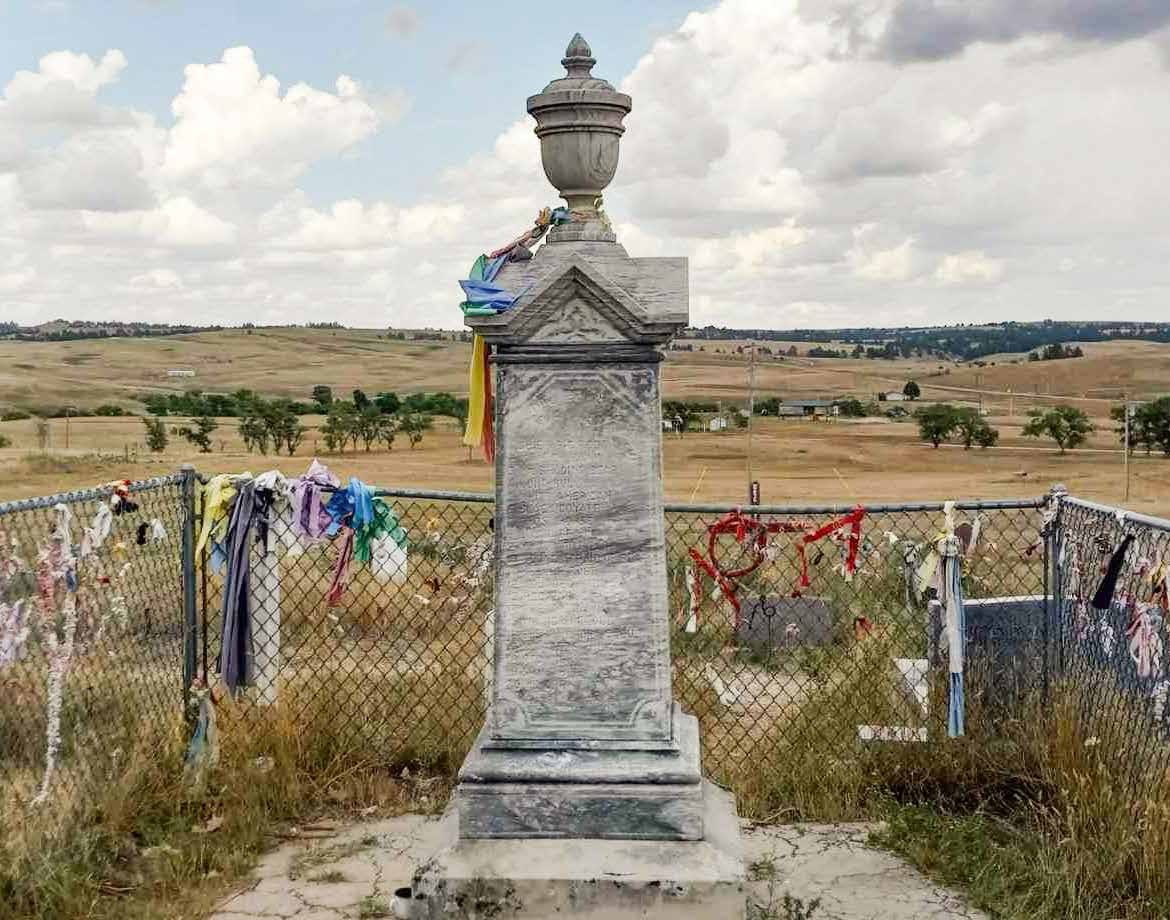
The closest thing to a memorial we have in the United States is a marker at Wounded Knee, South Dakota. There on Dec. 29, 1890, the administration of Pres. Benjamin Harrison massacred between 150 and 300 Lakota Indians.
Shortly after the murder of Lakota leader Sitting Bull, the Army’s 7th Cavalry murdered the Indians with rapid-fire Hotchkiss cannons, mowing down an entire forced encampment and hunting down fleeing families in the snow.
Rather than one memorial such as in Washington, D.C., I would propose putting a Wounded Knee-type marker everyplace there was a battle where Indians fell.
Nor is there any memorial for the half-million Africans transported to the United States as chattel slaves, or for their descendants who lived and died under slavery. In my view, the fact that the American people do not grieve this tragedy is at the heart of the unrest that we suffer as a nation — and the injustice and cruelty we inflict on others.
Abolitionist Fredrick Douglass (1818-1895) wrote, “What, to the American slave, is your 4th of July? I answer; a day that reveals to him, more than all other days in the year, the gross injustice and cruelty to which he is the constant victim.”

There Are No Certainties
We can get beyond this if we want — for now. I have never seen that there is much will to engage real questions or to confront the truth of anything. Doing what I do, I get to study people’s responses to what I do. There are always a few people who get it. Then there are the ongoing excuses for the lack of integrity in people who hold themselves up as trustworthy.
Mostly the response is either, “Good for you!” or “I don’t like what you’re saying, so you must be wrong.” To me, they are equivalent.
One of my most ardent supporters recently said that I don’t seem like someone who is confident that “the good” will prevail.
He is correct. I have no such confidence. If I did, I would be playing my guitar or out for a bike ride right now. Whether what is helpful to humanity — that is, the good — prevails is mostly up to us, and we will need to work for it against any assurance of success.
The Digital Tsunami
That is way too much responsibility for nearly everyone, and we barely remember how to work together, or work without getting paid — but there is something worse happening.
Today, the ongoing tsunami of toxic effluent created by “generative A.I.” is turning many of our minds, and our collective mind, into sludge. This sludge factory has infiltrated nearly every company and every government agency. Getting beyond our situation into something better will require creativity and motivation of an intensity that I’ve never seen before, and for which I believe there is no precedent.
Yet exposure to the A.I. environment itself damages and neutralizes those very abilities. This involves any form of letting one of those things run your life, or living any part of your life algorithmically. The more of your own choices you make, the more immunity that you have from the worst effects. The more creative you are in the digital environment, the less likely it is to damage you.
And it’s essential that you be discerning and disciplined in your use of the digital environment. It’s time to stop latching onto “what to believe.”


I’m not surprised that nobody much cares about the 250th anniversary of the United States. I’m not surprised that there is no sincere reflection on the state of our country, or its history, or the depleted and depressed mental and emotional condition of its people (including many children) — not to mention economic conditions.
All the federal government has to offer for the celebration is a Ferris wheel on the national mall and your official Trump commemorative passport.
Meanwhile, the bloated billionaire class sucks resources from society ongoing and people still look up to these greedy criminals as some sign of potential. Everyone is sick with the poison of living in a nation and indeed a world where everything is all about money.
The United States of America has no greatness left that it can fall back on. A free society is not one where you’re always being tracked, stalked, photographed and recorded. We have the right to be “secure in our papers” and all of our email is scanned and archived. In a free society, you have privacy.
Anyone who says that the U.S. is the greatest country in the history of the world — and you will still hear this — has never traveled, does not know history, is a con man, or is lying to themselves. I understand the need for such a lie. The corresponding truth takes a lot of work to unravel.
Greatness is not about the past. It’s about how we confront the present and build the future. That is asking a lot of anyone who doesn’t think that there is one.
And yes, I fly an American flag outside my house — a Betsy Ross edition.
Thank you for reading, if you’ve got this far. I am interested in your reflections on the 250th anniversary of the United States.
Mitákuye Oyás’iŋ — we are all related.


Eric, thank you for this beautifully written, painful piece, and for speaking to the brittle inability of most of us to grieve. This holiday I plan to pray to my ancestors for guidance. I come from generations of northern New England farmers. Two of them became homeopathic doctors and served small towns in coastal Massachusetts as family practitioners in the era just prior to Rockefeller medicine’s hijack of our healthcare system. May more of us open to a broader vision of healing that honors and cultivates the innate wisdom of both our bodies and our minds
VIA EMAIL
Hello, Eric Francis Coppolino!
I had a similar experience at the age od 55, when I joined a group of Canadians who went to Cuba, which the USA is still punishing for something the US is doing to many South American countries, i.e. with their famous " sanctions!"
Cuba can't sell their goods anywhere.
Cuba is a poor country, but the US Government doesn't care what or who they punish with " US sanctions, " i.e. punishing the people of any country the US sanctions. i.e. The people of these countries starve and suffer from these " US sanctions!"
This is now happening in Gaza, thanks to Israel!
The US Government is not concerned what it's doing to people in South American, or to the people in middle-Eastern countries! The US has the military power to do so!
We stayed three weeks in Cuba.
The last two weeks we lived with two different families, who were gratious to put us up, feed us, and teach us rudimentary Spanish!
The first week we stayed in Havana, at the University, going out every day, meeting Cubans in order to practice our rudimentary Spanish.
The second and third week, we lived with two different families.
The first one was in a fisherman's cottage. He showed us how he fished every day for his meal, and also where he sold some of his catch on the market!
The second family lived in the mountains. They had a few sheep and one cow. Their lives were based on simple animal husbandry. They took care of their few animals and themselves, and were content with their lives and didn't ask for more! They were very happy with the bucket of soap, toothpaste, sheets, towels, and olive oil we brought them. These were items that were completely absent in Cuba because of unfair and ridicullous US sanctions!
We have nothing here in Canada nor in North America, equivalent to such arrangments, where perfect strangers are welcomed into our homes and treated with hospitality and friendly sharing of food and space!
We would learn to be more generous, sharing food and space with perfect strangers. To be " hospitable," was praised to the nth degree in Ancient Greece! We have forgotten this "virtue" completely, in our "me-myself- and- I" Western society.
What say you, Francis Coppolino?
Sincerely,
Hedy Lanthier